
Choosing an electric scooter vs electric bike mostly comes down to trip length. Scooters suit trips under about 5 miles. E-bikes suit longer ones.
Pick a scooter if you need something light and foldable for short hops, apartment storage or transit connections. Pick an e-bike if you ride farther, climb hills, carry cargo or want some exercise.
Electric Scooter vs Electric Bike Specs Side by Side
| Feature | Electric scooter | Electric bike |
|---|---|---|
| Top speed (motor assist) | 15 to 20 mph in most cases; dual-motor models 30 to 50 mph | Class 1/2: 15 or 20 mph; Class 3: 28 mph |
| Range per charge | About 20 to 25 miles | Average 30 to 50 miles; up to 100 miles with dual batteries |
| Battery capacity | About 250 Wh | Up to 1,000 Wh |
| Weight | 15 to 30 lb | 45 to 60 lb; heavy-duty up to 100 lb |
| Average price | $500 to $700 (entry $200 to $300) | $2,000 to $2,500 (entry $800 to $1,200) |
| Battery replacement | $300 to $500 | $500 to $900 |
| Best trip length | Under about 5 miles | Over about 5 miles |
These are typical ranges, not specs for any one model. Real numbers vary with battery size, rider weight, terrain and weather, so check the spec sheet for the model you’re considering. Cost figures are rough estimates, not current quotes.
Speed Limits and Class Rules
Many US states sort e-bikes into three classes. Class 1 and Class 2 e-bikes stop motor assist at 15 or 20 mph, and Class 3 e-bikes stop pedal assist at 28 mph. These classes are written into state law, which is why rules vary from state to state.
Scooters have no comparable class system. Where and how fast you can legally ride one depends on your state and city code. The same scooter can be legal on one city’s streets and restricted in the next, so check local rules before you ride on roads, bike lanes or paths.
Speed matters most with dual-motor scooters. They can reach 30 to 50 mph, far above the 15 to 20 mph typical of most models. Some states treat faster scooters differently, so a high-speed model may face different requirements than a standard one.
Range, Battery Size and Trip Length
Battery capacity is the main reason e-bikes go farther. A large e-bike pack can hold up to four times the energy of a typical scooter battery.
Here’s how that plays out on a 6-mile commute each way, or 12 miles round trip. That trip uses roughly half or more of a typical scooter’s 20 to 25 mile range. That leaves little reserve for hills, cold weather or a headwind. On an e-bike with average range, the same trip uses a much smaller share of the battery.
For daily commuting, expect to charge a scooter most nights. An e-bike’s bigger battery can often cover the same daily distance with charge to spare.
Weight, Storage and Theft Risk
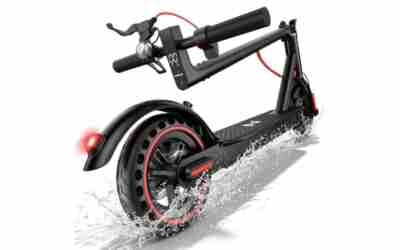
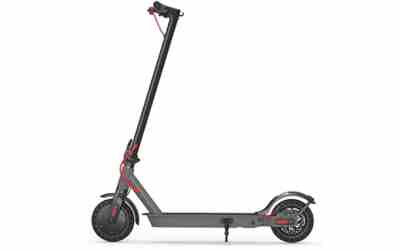
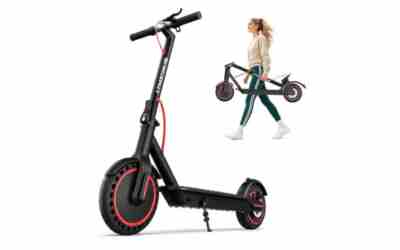
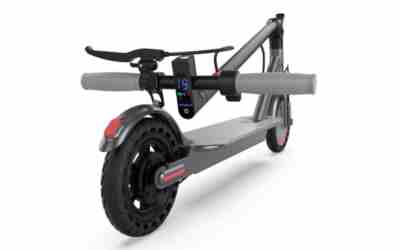
At 15 to 30 lb, most scooters fold to fit in a closet, under a desk or on a train. That makes them a better match for apartments and mixed transit commutes.
E-bikes usually weigh 45 to 60 lb or more. They take up more floor space and are hard to carry up stairs or lift into a car, so they usually live in a garage or ground-floor room.
Cargo is another difference. A scooter carries what fits in a backpack, plus a small rack on some models. E-bikes can take racks and bags for groceries or heavier loads.
Either one is easy to steal if left unlocked. A light scooter is easy to grab and toss into a vehicle, while a heavy e-bike is harder to move quickly. With both, lock the frame to a fixed object rather than just locking a wheel.
Electric Scooter vs Electric Bike on Hills and Rough Roads
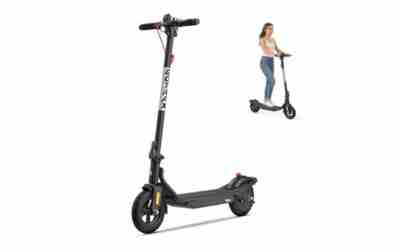
Most scooters ride on small 5 to 10 inch wheels. They pass more bumps to the rider and can feel less stable over potholes, cracks or gravel than the larger wheels on most e-bikes.
Hills drain the battery faster on either vehicle. If your route is steep, plan on less range than the spec sheet lists.
Pedals give e-bikes an edge on climbs, because you can add your own effort when the motor needs help. That also means some exercise. A scooter has no pedals, so the motor does all the work.
Frequently Asked Questions
Can a child ride an adult electric scooter?
It’s not a good idea. Adult scooters are built for adult weights and top speeds, so a child should ride a kids’ model. Riding any scooter outside its rated weight range also puts extra stress on the frame and brakes.
Can I ride an electric scooter on a sidewalk?
It depends on where you live. Many US cities restrict or ban scooters on sidewalks, even where the same scooter is legal on the street. Check your city’s rules before riding.
Can I charge an e-bike battery with a scooter charger?
No. Chargers are matched to a specific battery’s voltage and chemistry, so the wrong charger can damage the battery or create a safety risk. Use only the charger made for each battery.
Do I need a driver’s license to ride an e-bike in the US?
Generally not. No federal law requires a license for adult e-bike riders. States set their own rules, and some add requirements for higher-powered models.
{“@context”: “https://schema.org”, “@type”: “FAQPage”, “mainEntity”: [{“@type”: “Question”, “name”: “Can a child ride an adult electric scooter?”, “acceptedAnswer”: {“@type”: “Answer”, “text”: “It’s not a good idea. Adult scooters are built for adult weights and top speeds, so a child should ride a kids’ model. Riding any scooter outside its rated weight range also puts extra stress on the frame and brakes.”}}, {“@type”: “Question”, “name”: “Can I ride an electric scooter on a sidewalk?”, “acceptedAnswer”: {“@type”: “Answer”, “text”: “It depends on where you live. Many US cities restrict or ban scooters on sidewalks, even where the same scooter is legal on the street. Check your city’s rules before riding.”}}, {“@type”: “Question”, “name”: “Can I charge an e-bike battery with a scooter charger?”, “acceptedAnswer”: {“@type”: “Answer”, “text”: “No. Chargers are matched to a specific battery’s voltage and chemistry, so the wrong charger can damage the battery or create a safety risk. Use only the charger made for each battery.”}}, {“@type”: “Question”, “name”: “Do I need a driver’s license to ride an e-bike in the US?”, “acceptedAnswer”: {“@type”: “Answer”, “text”: “Generally not. No federal law requires a license for adult e-bike riders. States set their own rules, and some add requirements for higher-powered models.”}}]}